Crazy Time Live Casino in the UK: Rules and Access
The guide explains UK authorisation, online access, demo limitations, multipliers and safeguards around live play.
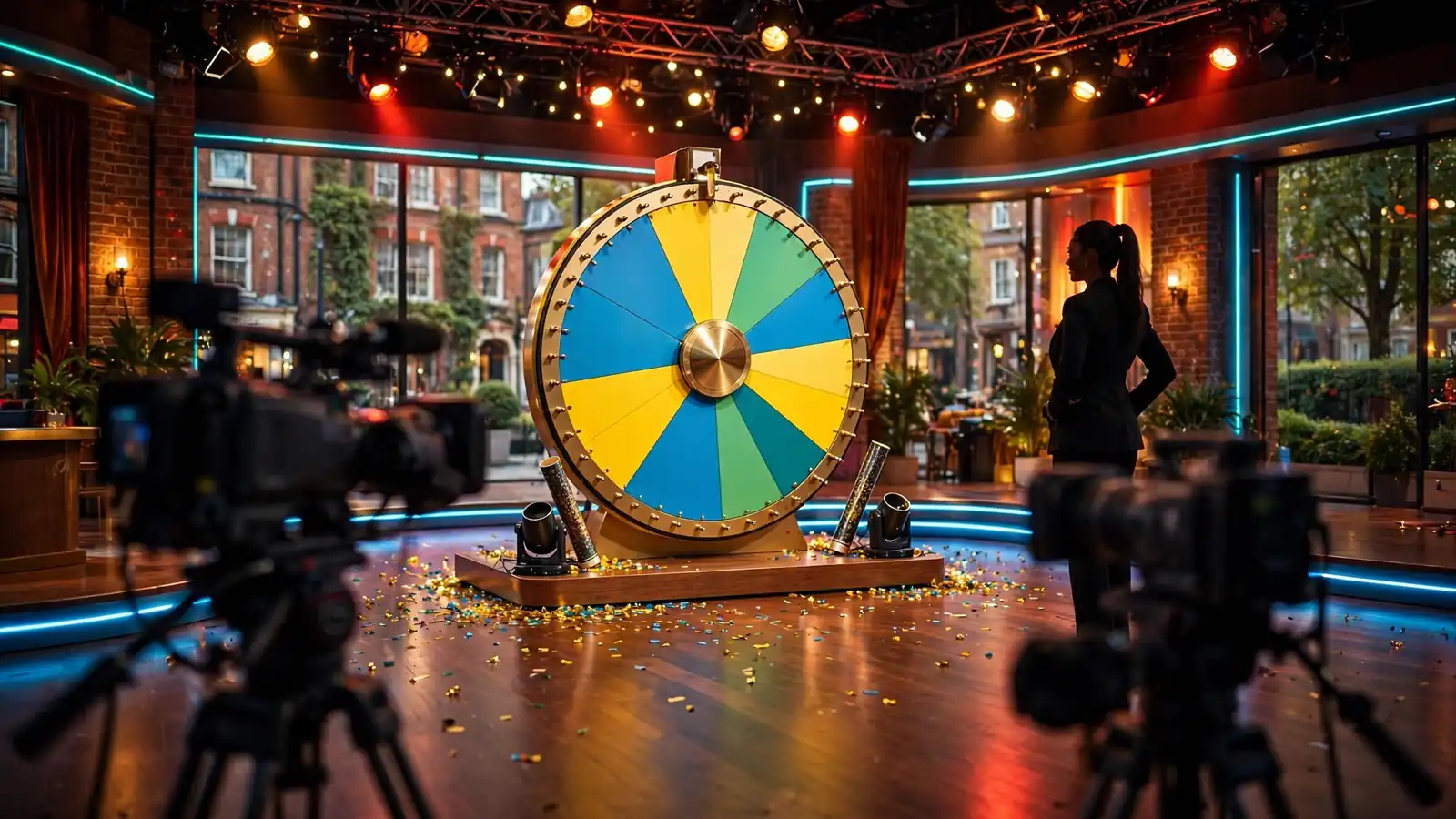
Table of Contents
- How UK Casino Licensing Applies to Live Games
- Online Access to Crazy Time in the UK
- Choosing a Casino for a Live-Game Session
- Live Casino Games Available Alongside Crazy Time
- What Strategy Can and Cannot Establish in Crazy Time
- Crazy Time as a Live Casino Game Show
- Free Play and the Limits of a No-Cost Trial
- Bonuses, Deposits and Account Safeguards
- Crazy Time Rules, Scores and Multipliers
- Using a Crazy Time Demo to Understand the Interface
How UK Casino Licensing Applies to Live Games
A live casino game does not sit outside gambling regulation because it is streamed from a studio or because its equipment is located elsewhere. For consumers in Great Britain, the relevant question is whether the operator offering the game holds the required authorisation to provide remote gambling in that market. The UK Gambling Commission regulates commercial gambling in Great Britain and is the sole regulator for that activity. Its remit includes online casinos.
This means the licensing status of a site matters when considering Crazy Time casinos in the UK. The game’s live presentation does not, by itself, establish that the casino is authorised to serve British customers. Nor does a studio’s location determine which regulator applies to the operator. The Commission’s oversight covers remote gambling offered to Great Britain consumers regardless of where the key equipment is situated.
What an operating licence establishes
The Gambling Commission grants operating licences to businesses and personal licences to individuals working in relevant operating roles. These are distinct forms of authorisation: a personal licence held by an individual is not a substitute for the operating licence required by a business offering gambling to customers.
For a casino that makes live games available, the operator’s status is therefore the starting point. A game page, a prominent brand, or an indication that a broadcast is live is not evidence of the casino’s regulatory authorisation. The operator serving the customer must hold the relevant licence for its remote gambling activity. The requirement concerns the business and the service it provides, not simply the game title shown on screen.
This distinction is useful when a site presents a catalogue of live products or refers to a named game such as Crazy Time. Such references describe the entertainment offered; they do not independently verify the operator’s standing. Licensing should be assessed at the level of the business responsible for accepting and managing the gambling account.
Checking an operator’s status
The UK Gambling Commission’s public register is the appropriate place to verify an operator’s licence. Before depositing, the licence number and the operator’s identity should be checked against the register. The details need to correspond to the site in use, rather than merely to a similarly named company or another domain associated with a brand.
Deal or No Deal Slots UK: Game and Regulation
That comparison matters because names can be similar, and a site may display regulatory wording without making clear which legal entity operates it. A careful check links the brand and domain to the business named on the register and confirms that the relevant operating authorisation is recorded. A logo or an unsubstantiated statement about regulation should not be treated as equivalent to a register entry.
A register check is a point-in-time assessment. It establishes what the public record shows when consulted; it should not be treated as a permanent guarantee of future status or as proof that every other aspect of a site is suitable. If the operator identity, licence details and domain do not align, the discrepancy should be resolved before an account is funded.
What licensing means for live-game provision
A valid operating licence places the operator within the Commission’s regulatory framework for the gambling activity covered by that authorisation. It does not mean that every live game is independently licensed in the same way as the business, nor does the appearance of a particular game establish the scope of the operator’s permission. The key licensing question remains whether the business is authorised to offer remote gambling to consumers in Great Britain.
In practice, the same principle applies whether a casino offers live tables, a game-show format or other online casino content. A live broadcast may involve people, equipment and production processes in a location separate from the customer, but that arrangement does not remove the operator’s obligation to hold the relevant licence. The regulatory connection follows the service offered to Great Britain consumers, not the physical position of the studio.
It is also important not to read more into a licence than it establishes. Regulatory authorisation is a necessary basis for lawful remote gambling in the market; it is not a promise of winnings, a prediction of outcomes, or an endorsement of a particular session. It does not turn entertainment into a risk-free activity. Gambling should be limited to money that can be afforded to lose.
Gambling Risk
Gambling should be limited to money that can be afforded to lose, as any session involves the possibility of losing money.
The practical boundary
For anyone comparing online casinos that list Crazy Time, the first distinction is between a game’s availability and the operator’s authority to provide gambling in Great Britain. Availability may be described on a site, but the operator’s status is checked through the Commission’s public register. Neither the game’s title nor its live format replaces that check.
Licensing also has a defined territorial context. The Commission regulates remote gambling offered to consumers in Great Britain even when the relevant equipment is elsewhere. The focus is therefore not on where a stream originates, but on whether the business serving the customer holds the required operating authorisation. That is the basis on which the regulatory status of a live-game casino should be assessed.
Online Access to Crazy Time in the UK
Crazy Time is encountered online as part of a casino’s live-game area, rather than as a conventional video slot or a static casino game. Access therefore depends on whether an online casino serving the British market includes the title in its catalogue and makes its live casino service available to the account in question. The name of a game alone does not establish that it can be opened at every casino, or that it will appear in every version of a platform.
Crash Casino Games in the UK: Categories and Rules
A live casino game combines a streamed presentation with software used to display the game and handle account activity. This is different from a pre-recorded clip, an ordinary casino video game, or a promotional video about a product. The live format is presented as an event in progress, with the player interface connected to the casino session. The stream and the interface perform different functions: the broadcast shows the live presentation, while the platform provides the controls and account information associated with participation.
Searching an online casino’s catalogue for Crazy Time may be one way to establish whether it is listed, but a catalogue entry alone does not prove that a session is available at that moment. The title may be shown in a live casino category, in a dedicated game listing, or within a broader casino interface. These are different ways of organising content, rather than evidence that the game itself is a separate type of online casino. A result may also lead to an information page rather than directly to a playable session.
Availability can vary between platforms. Some casinos offer live casino content as part of a wider online service, while others may have a narrower selection. A platform that carries live games does not necessarily carry Crazy Time specifically. Nor does the phrase “live casino” on a site establish which titles are accessible. The relevant distinction is between a general live-game offering and the presence of this particular game in its current catalogue.
The phrase "Crazy Time online casino" can refer to either a platform that offers the game or the game itself accessed through a casino; it does not identify a distinct casino brand.
The online setting also means the experience depends on a working connection and on the platform’s ability to display its live content. If a stream does not load or the game interface is unavailable, that does not by itself establish that the title has been removed from the casino. Temporary access problems and a catalogue that does not include the game are separate possibilities. The casino’s own displayed information is the appropriate place to determine whether the game is currently listed, without assuming that availability is identical across devices or accounts.
The phrase “Crazy Time online casino” can describe two different things: a casino platform that offers the game, or the game accessed through an online casino. It does not identify a distinct casino brand. Similarly, a site described as an online casino with Crazy Time should be understood as an operator whose catalogue includes the game, not as a special category of gambling service. This distinction matters because game availability is a feature of a casino’s offering, whereas the legal status of the operator is a separate matter.
In Great Britain, remote gambling operators serving consumers must hold the relevant Gambling Commission licence. Online gambling is legal for adults aged eighteen and over when offered by a UK Gambling Commission-licensed operator. This legal framework applies to remote gambling regardless of where the operator’s key equipment is located. The presence of a live game on a website does not, on its own, establish that the operator is authorised to serve the British market; the operator’s status and the game catalogue are separate questions.
Casino Dice Games in the UK: How They Work
Access should not be confused with a promise that a game will remain available or that every listed session will be open continuously. A casino’s catalogue and live interface can change, and a listing is not a guarantee of uninterrupted service. Nor does the live presentation establish anything about the likelihood of a particular outcome. Those matters are distinct from the basic question of whether the game can be reached through an online casino.
Any online gambling session involves a possibility of losing money. Gambling should be limited to what can be afforded to lose.
Top online casinos in the UK
- EvoSpinBonus: 125% up to €2500 + 125 Free Spins · Payout speed: 1-3 business days
- SpinFormulaBonus: 550% Up To £15,000 + 550 FS · Payout speed: 1-3 business days
- BritsinoBonus: Welcome Package – Get your £2,200 + 2,000 FS · Payout speed: 1-3 business days
- NightWinBonus: £900 + 400 free spins · Payout speed: 1-3 business days
- NightLuckBonus: Welcome Pack + 805% Up To 6400€ + 280 FS · Payout speed: 1-3 business days
- ZombillionBonus: Welcome Pack 250% up to £4000 + 200 FS · Payout speed: 1-3 business days
- WinBeastBonus: €5000 + 500 FS + €650 Freebet · Payout speed: 1-3 business days
Choosing a Casino for a Live-Game Session
A useful comparison of casinos offering Crazy Time begins with the game itself, not a claim that one site is the best. Availability can vary, and a title shown in promotional material may not be present in the live lobby. The relevant check is whether the game can be located in the casino’s current catalogue and opened in the form described. A clear listing makes it easier to distinguish a live-hosted game from a similarly named product, replay, or other casino content.
The wider live-game catalogue can also indicate how the operator presents this part of its service. A lobby with identifiable categories, searchable titles and clear game descriptions is easier to assess than one where games are difficult to find or their formats are unclear. The range matters less than whether the available titles are accurately labelled and the information is consistent between the lobby and the game screen. A casino should not be judged on the number of titles alone: a larger catalogue does not establish that every game will suit a particular session.
Do
- Check if the game is in the current catalogue
- Verify the interface for legible controls
- Assess how the stream loads on your device
Don’t
- Rely on promotional headlines for availability
- Judge a casino by the number of titles alone
- Assume polished design ensures better results
Grosvenor provides a historical example of a broader live offering. It first introduced live casino games in 2013, with card and casino options including Blackjack, Texas Hold’em and Roulette. That record helps place live games within a casino’s wider product range, but it does not establish the present availability of Crazy Time or the quality of any current session. Current details should be checked in the operator’s own catalogue rather than inferred from past launches.
The session environment is another practical point of comparison. Before wagering, the game screen can be examined for legible controls, readable on-screen information and clear separation between the live presentation and account functions. The transition into and out of a game should be understandable, and the displayed options should correspond to the labels used in the lobby. These are observable features, not proof that outcomes are better or that a casino will provide uninterrupted service.
Technical presentation can be assessed without assuming that a live broadcast will perform identically on every device or connection. A short look at how the stream loads, whether the interface remains responsive and whether the game information stays visible can reveal whether the environment is workable. If the picture or controls are unclear, continuing to wager may make it harder to follow the session. A polished visual design, however, is not evidence of more favourable results.
Promotional language should be kept separate from evaluation of the game provision. A headline offer does not show that Crazy Time is available, that the live lobby is easy to use, or that the session conditions are suitable. Any offer has its own terms and should not be treated as part of the game’s inherent features. Likewise, claims about a casino’s results or strategies do not provide a sound basis for ranking its live-game service.
A measured comparison therefore rests on observable points: whether Crazy Time is currently listed, whether its format is clearly identified, how the broader live catalogue is organised, and whether the interface is comprehensible during a session. These checks cannot establish that one casino is universally best. They can help distinguish a clearly presented live-game offer from one whose availability or session details are difficult to verify. Gambling involves the risk of loss, so only money that can be afforded to lose should be wagered.
Live Casino UK: How Games and Tables Work
Live Casino Games Available Alongside Crazy Time
Crazy Time sits within a broader live-casino category that includes both familiar table games and formats built around a host-led presentation. The distinction is useful when comparing the kinds of experience offered: a blackjack table centres on card decisions, roulette on a wheel and its numbered layout, while a game show such as Crazy Time uses a more theatrical format. These labels describe different styles of live play; they do not establish that every casino carries each one.
The traditional table-game range can include blackjack, roulette and poker. Their shared live element is a streamed session with a presenter or dealer, but the focus of play differs. Blackjack is organised around cards and decisions made during a hand. Roulette places attention on the wheel and where a result lands. Poker is a card-game category with formats that may vary in how participants play against one another or against a house-led structure. A title’s name alone does not settle its rules, so the published game information remains relevant when distinguishing one version from another.
Traditional Table Games
Includes blackjack, roulette and poker, focusing on card decisions or wheel outcomes with a streamed presenter.
Named Variants
Products like Lightning Roulette or Infinite Blackjack that add specific features to familiar game families.
Live Game Shows
formats like Crazy Time that use a theatrical, host-led presentation rather than a conventional table.
Grosvenor’s live-casino offering provides a historical example of this range. The operator first introduced its live games in 2013, with Blackjack, Texas Hold’em and Roulette among the games offered. That example shows how a live-casino portfolio can bring conventional card and wheel games together; it does not establish what any particular casino currently offers.
Named variants can add a different presentation or feature set to familiar categories. Lightning Roulette is a roulette variant, while Infinite Blackjack is a blackjack title. Their names indicate their broad game families, but do not by themselves explain how a round works or what distinguishes the version from other roulette or blackjack tables. Those details should be checked in the game’s information rather than inferred from branding.
Other named live products include Dream Catcher and Common Draw. Their presence in a game catalogue would broaden the range beyond standard table-game labels, although the title alone is not enough to establish the precise format or mechanics. Crazy Time is also best understood as part of this wider range: it is a live casino game show, rather than a conventional blackjack, roulette or poker table. Its wheel is an identifying element of the presentation, but the wheel’s appearance does not make the experience equivalent to a standard roulette game.
This variety can make a live-casino lobby look more uniform than its contents really are. A stream, host and real-time presentation may be common features, while the underlying game structure differs substantially. A table-game label signals a broad category; a named variant identifies a particular product; and a game-show title points to another style of experience. These distinctions help describe the surrounding selection without implying that one format is a substitute for another.
Mines casino game in the UK: demo and play
Availability also varies by casino, so a list of familiar titles should not be treated as a guarantee that they appear together. A casino may present conventional tables, branded variants and game-show formats in separate parts of its live section. The relevant comparison is therefore the actual catalogue and the information attached to each title, not an assumption that all live games share rules or presentation.
Live play involves wagering, whatever format is chosen. Gambling should be limited to money that can be afforded to lose.
What Strategy Can and Cannot Establish in Crazy Time
Advice described as a Crazy Time strategy may concern how wagers are selected, how a budget is divided, or when a session ends. These are decisions about exposure and conduct. They do not, by themselves, show that a particular result is more likely or that a sequence of outcomes can be forecast. That distinction matters when evaluating systems presented as ways to improve results.
A strategy can be assessed for clarity and consistency. It may specify what information is considered, how decisions are made, and when play stops. Those features can make a method easier to follow, but they are not evidence of predictive power. A detailed method, confident explanation or attractive chart cannot establish that its selections will produce a better outcome. Claims about an advantage require evidence that connects the method to outcomes, rather than a description of the method alone.
Attention: A strategy or outcome tracker is descriptive of past events and cannot demonstrate or guarantee what will occur next.
Reading outcome records and trackers
A Crazy Time tracker may display recorded results or organise them into a history. Such a record can help describe what has occurred within the period it covers. It cannot, solely by displaying past outcomes, demonstrate what will occur next. A pattern that appears notable in a short record may be a feature of that sample rather than a dependable signal.
The value of a tracker therefore depends on what it records and how its information is interpreted. Coverage, accuracy and completeness matter: an incomplete record cannot support broad conclusions about the game. Even an accurate history remains retrospective. To support a prediction, a proposed pattern would need to be defined in advance and tested against relevant outcome data, with a clear method for judging whether results exceed what chance variation could explain. Without that kind of evidence, a tracker is descriptive, not predictive.
Searches for a Crazy Time casino tracker may also encounter tools that label outcomes as trends, streaks or signals. These labels are interpretations, not proof that the next result can be anticipated. A streak in recorded data does not establish that the pattern will continue, while the end of a streak cannot be inferred merely because it seems due. Neither framing turns a historical record into a reliable forecast.
What a strategy claim needs
A claim that a casino game strategy improves results should identify the mechanism said to create that improvement and provide evidence capable of testing it. The test would need to distinguish the proposed effect from ordinary variation, and it would need to apply to the version and conditions being discussed. Testimonials and selected examples are weak substitutes: they can show that particular outcomes occurred, but not that the method caused them or will generalise.
Chicken Road Game in UK Casinos: What’s Verified
The phrase “Crazy Time casino history” can refer simply to past results or to the product’s background. Neither meaning supplies a betting method. Historical information may provide context, but it should not be treated as a forecast unless a tested relationship between that information and later outcomes has been established. A confident account of past events is not equivalent to evidence of future predictability.
This does not mean every decision is meaningless. Setting a spending boundary, choosing whether to continue, and declining to increase a wager after losses are forms of risk management. They can limit exposure, but cannot guarantee a return or change the underlying chance of an outcome. No strategy should be treated as a way to recover losses. Gambling should be limited to money that can be afforded to lose.
Crazy Time as a Live Casino Game Show
Crazy Time is presented as a live casino game show: a casino product framed around a televised-style experience rather than the appearance of a conventional table-game session. That description helps place it within the live-casino category, but it does not, by itself, establish every feature of a particular version or how a casino makes the game available.
The game-show framing is relevant because it shapes how the experience is understood. A live casino product can combine gambling with a presentation designed for viewing, so the entertainment format and the wagering activity should be considered separately. The show-like character does not turn a gambling product into a non-gambling one, nor does it establish that participation is predictable or that any outcome can be controlled.
The phrase “live” also needs careful interpretation. In this context, it identifies the game as part of the live-casino category; it should not be treated as evidence about a specific casino’s technical setup, broadcast quality, or operating conditions. Those details can differ between platforms and require separate confirmation. The product name alone cannot establish what is displayed on screen, which options are available, or whether the same presentation is used in every setting.
Live Casino Game Show Framing
A live casino product combines gambling with a presentation designed for viewing. The show-like character does not remove the financial risk of wagering or make the outcomes predictable.
For a UK audience, Crazy Time is therefore best approached as a named casino game-show product, not as a general entertainment programme. Its format may be distinctive, but the label does not answer practical questions about rules, scoring, multipliers, access, or any free-play option. Those are separate matters, and the published information for the particular version is the appropriate basis for understanding them. Assumptions based only on the title or the game-show description are not a substitute for checking that information.
This distinction also helps keep claims about the experience proportionate. Describing a game as a show does not demonstrate that it is more transparent, easier to understand, or more favourable to players than another casino game. Presentation can influence how a session feels, but it cannot establish the likelihood of an outcome. Nor does a lively format change the basic financial risk of wagering.
The UK setting matters because gambling remains gambling even when it is packaged as a live show. Any session involving stakes can result in losses, and entertainment value should not be confused with a prospect of profit. Gambling should be limited to money that can be afforded to lose.
This overview keeps the focus on what the game’s category and framing convey. It does not infer detailed mechanics from the name, or treat a particular casino’s presentation as universal. The live game-show description provides a useful starting point; the game’s published rules and the conditions of any specific offering determine the details beyond it.
Free Play and the Limits of a No-Cost Trial
A free-play option and gambling with deposited funds are different kinds of activity. In free play, no personal gambling balance is put at risk; in real-money play, wagers are made using funds held in a gambling account. The distinction matters because a no-cost session cannot establish what a funded session will feel like or involve.
The phrase “Crazy Time casino free” can refer to more than one thing: a game made available without a deposit, a promotional offer, or a version that does not use real money. Those arrangements should not be treated as interchangeable. An offer described as free may still have conditions, while a non-cash mode may not include every feature or operate in the same way as a real-money game. The terms attached to any specific option determine what it provides.
Free-play options and real-money play are different; a no-cost session cannot establish how a funded session will feel or operate.
Searches for Crazy Time free spins also raise a separate issue. Free spins are generally associated with games that resolve through spins; the wording alone does not establish that such an offer applies to Crazy Time, or that it has any particular value or conditions. Promotional language should be read alongside the operator’s terms rather than taken as proof of a no-cost way to play.
A free casino game can be useful as a low-risk way to become familiar with a product, if the operator actually offers one. It does not demonstrate that a funded account has the same conditions, nor does it provide a basis for expecting a particular result when wagering. A trial should therefore be understood narrowly: it may reduce the financial exposure of that session, but it does not make later gambling risk-free.
A safe Crazy Time casino UK search should not be answered by relying on the word “free” alone. The description of a mode or offer is not, by itself, evidence about the operator’s status or the protections attached to a real-money account. Those are separate matters. Any decision to gamble with deposited funds carries the possibility of losing them, whether or not a free option was used first.
No-cost access is best treated as a distinct option, not as a substitute for understanding funded play or its risks. Gambling should be limited to money that can be afforded to lose.
JetX Casino Game in the UK: Licensing and Access
Bonuses, Deposits and Account Safeguards
A Crazy Time casino bonus may be presented as a welcome offer or a promotion linked to a deposit, but the headline value alone cannot establish what a customer will receive. The terms governing eligibility, qualifying play, withdrawal and expiry determine how an offer works. Those details should be assessed before funds are deposited; a bonus is not evidence that a game will produce a particular result or payout.
The same caution applies to claims of a no-deposit bonus. Such wording does not establish that an offer is available, that it can be used on Crazy Time, or that any resulting balance can be withdrawn without conditions. Promotional terms should be read in full, and unclear conditions are a reason not to rely on the offer.
Before depositing, the operator’s licence number should be checked against the UK Gambling Commission’s public register. A search for a casino described as “not on GamStop” does not establish that it is authorised to serve Great Britain. Offshore casinos fall outside the UKGC system; their accessibility does not confer the safeguards attached to a UK licence. GAMSTOP is a self-exclusion scheme, not a substitute for checking an operator’s regulatory status.
For a UK-licensed gambling account, age verification must take place before deposits are allowed. New customers must also be prompted to set a financial limit before their first deposit, with account-level limit controls available thereafter. These controls can support planned spending, but they do not remove the possibility of loss. Only money that can be afforded to lose should be used for gambling.
UK-licensed casinos cannot accept credit cards for gambling. The restriction also covers credit-card funds routed through a money service business and wallets that allow credit-card money to fund gambling. A deposit method being available in an account does not make every source of funds acceptable.
Checking Casino Status
- Verify the operator’s licence number on the UK Gambling Commission public register
- Complete the mandatory age verification process
- Set a financial limit before the first deposit
- Confirm that the payment method is not a credit card
Promotional claims about Crazy Time casino payouts should not be treated as a forecast of individual results. A licensed operator must provide an internal complaints process and access to an approved Alternative Dispute Resolution service. Those routes concern complaints; they do not guarantee a particular outcome from play or from a bonus.
Crazy Time Rules, Scores and Multipliers
Before wagering, the published rules are the most reliable basis for understanding how a Crazy Time round is settled. The game’s name alone does not establish its scoring system, the conditions attached to each outcome or how multipliers are applied. Those details should be checked in the rules provided for the specific game version, rather than inferred from promotional descriptions or informal summaries.
A useful rules review should clarify what counts as a valid selection, when wagers close, how the result is determined and how any return is calculated. It should also explain whether a multiplier applies to a particular outcome, a feature or another part of settlement, and whether additional conditions affect the final amount. These are distinct questions: a displayed multiplier does not, by itself, show what stake it applies to or what a player will receive.
“Scores” can refer to more than one thing. A display may show a round result, a feature outcome or a running record, but those labels should not be treated as interchangeable. The game rules and on-screen explanations need to identify what each score represents and whether it has any role in settling a wager. A sequence of previous results is not enough to establish the rules for a later round.
The same caution applies to claims about casino multipliers. A figure shown in a game interface should be read in context, with the relevant conditions and settlement explanation, not as a standalone promise. If the rules do not clearly explain a term or calculation, the uncertainty should remain explicit; guessing at its meaning risks misstating the game.
For UK players, a trusted presentation means rules that are accessible and consistent with the game being offered, not an unsupported account of scores or payouts. Understanding the published terms can explain how a round is resolved, but it cannot establish what result will occur. Any wagering should remain within what can be afforded to lose.
Using a Crazy Time Demo to Understand the Interface
A Crazy Time demo, where one is offered, can provide a way to inspect the screen layout without placing wagers from deposited funds. Its practical value is limited to what the trial actually displays: it may help clarify where game controls, information panels and the live broadcast appear, but it cannot establish that every feature behaves identically in real-money play.
A live casino demo should also be distinguished from a recording or static preview. A preview can show presentation, while an interactive trial may allow controls to be explored. The label alone does not establish which kind is available, whether it uses the same interface as a funded game, or what conditions apply. Availability and functionality therefore depend on the specific casino’s offering.
Crazy Time is sometimes grouped with slot demos in casual descriptions, but that label can obscure the live-game format. A demo should be assessed by what it lets a participant inspect, rather than by assuming it works like a slot trial. It cannot show how a person will respond when real money is at stake, nor should its results be treated as evidence about future outcomes.
Play involving a deposit is materially different: wagers can affect an account balance, whereas a demo does not involve the same use of deposited funds. A trial is therefore useful for orientation, not as a substitute for understanding the game or its published information. Any real-money gambling should be limited to what can be afforded to lose.
Are online casino games licensed and regulated?
Yes. The UK Gambling Commission regulates online gambling in Great Britain, and operators serving consumers there must hold the relevant licence.
What are the online slot stake limits in Great Britain?
The limit is £5 per game cycle for adults aged 25 and over, and £2 for adults aged 18 to 24. These limits do not apply to roulette or blackjack.
Is LuckyPays licensed by the UK Gambling Commission?
No LuckyPays entry under its brand or the stated domain, luckypays.io, appears on the Commission’s public register dated 26 September 2026. Remote operators serving Great Britain must hold the relevant licence.
Written by the editors at 30bet.